Understanding Gatekeepers: The Psychology Behind Effective Bypass
To bypass gatekeepers effectively, one must first understand the gatekeeper’s objective and psychology. The gatekeeper stands between us and our goal; by first understanding the lock, we can better understand how to pick it.
By understanding the gatekeeper’s objective and relationship with confrontation, we can bypass effectively through tone, non-verbal cues, and strategic vagueness.
What Is the Job of a Gatekeeper?
A gatekeeper’s role is simple: Block the wrong people, and let through the right people with as little friction as possible.
Right People
- Colleagues
- Customers
- Existing partners
- Important contacts
Wrong People
- Salespeople
- Solicitors
- Unwanted interruptions
The gatekeeper is constantly filtering incoming calls through this lens.
The Psychology of a Gatekeeper
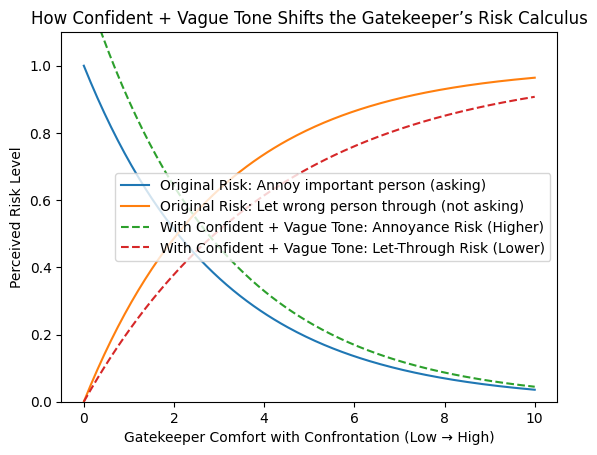
Every gatekeeper runs a subtle risk-reward calculation during an interaction.
They have two options:
- Let the caller through
- Ask clarifying questions to make a more accurate pass/block decision
The key factor driving this decision is:
Comfort With Confrontation
The gatekeeper understands that asking more questions may help them correctly identify and block a salesperson.
However, asking too many questions also creates a different risk:
Accidentally frustrating, delaying, or blocking someone important.
This tension sits at the center of the gatekeeper’s psychology.
The Internal Calculation
The gatekeeper is constantly balancing:
- The desire to accurately block someone who should not get through
- Against the risk of creating friction for someone who should
How Effective Callers Bypass Gatekeepers
The best callers understand this dynamic and present themselves as people who naturally ought to be transferred.
Because the true purpose of the call is solicitation — and because we never lie — this must be achieved through:
- Tone
- Delivery
- Leaving out unnecessary detail
The Two Core Principles
1. Sound Important
Most cold callers sound:
- overly friendly
- hesitant
- approval-seeking
- weak
Effective callers do the opposite.
They sound:
- confident
- direct
- calm
- strong
This immediately separates them from 99% of cold callers and subtly signals:
“This may be someone legitimate or important.”
2. Stay Strategically Vague
The more information you volunteer, the easier it becomes for the gatekeeper to categorize you as “sales.”
Instead, effective callers:
- answer directly
- avoid over-explaining
- provide only necessary information
- remain slightly vague about purpose
This creates uncertainty.
If the gatekeeper wants greater certainty, they must ask more questions — which increases the social risk of annoying or obstructing someone important.
That discomfort often works in the caller’s favor.
.svg)